Missing teeth can affect more than just your appearance. They can impact how you chew, speak, and even the alignment of your remaining teeth. Dental bridges are a popular and effective solution for replacing missing teeth, but many patients wonder if they are the right candidate for this treatment.
At Agave Dental, we believe that understanding your options helps you make confident decisions about your oral health. Here’s a closer look at what determines whether a dental bridge is the right solution for you.
What Is a Dental Bridge?
A dental bridge is a fixed restoration used to replace one or more missing teeth. It “bridges” the gap by anchoring an artificial tooth to neighboring natural teeth or dental implants. Bridges restore function, improve aesthetics, and help prevent surrounding teeth from shifting out of place.
Unlike removable dentures, dental bridges are permanently cemented and function much like natural teeth.
Who Is an Ideal Candidate for a Dental Bridge?
Not everyone with missing teeth is automatically a candidate for a dental bridge. Several factors are considered before recommending this treatment.
Number and Location of Missing Teeth
Dental bridges are ideal for patients missing one or a few consecutive teeth. The location of the missing tooth also matters, as bridges require stable support from adjacent teeth or implants.
If multiple teeth are missing across different areas, other options such as partial dentures or implants may be more suitable.
Health of Adjacent Teeth
The teeth on either side of the missing tooth, known as abutment teeth, must be strong and healthy enough to support the bridge. These teeth may need dental crowns to provide stability.
If adjacent teeth are weak, heavily decayed, or damaged, additional treatment may be necessary before placing a bridge.
Gum and Bone Health
Healthy gums and sufficient bone support are essential for the long-term success of a dental bridge. Gum disease or bone loss can compromise the stability of the supporting teeth.
Patients with untreated gum disease may need periodontal treatment before becoming eligible for a dental bridge.
Overall Oral Health
Good oral hygiene habits play a major role in bridge success. Patients who brush and floss regularly and attend routine dental checkups are better candidates, as bridges rely on the health of surrounding teeth and gums.
Chronic conditions such as teeth grinding may also be considered, as they can place excessive pressure on a bridge.
Age and Lifestyle Factors
Age alone does not determine eligibility for a dental bridge. Both younger and older adults can be candidates as long as their oral health is stable.
Lifestyle habits such as smoking can affect healing and gum health, which may influence the treatment recommendation.
Are There Situations Where a Dental Bridge May Not Be Ideal?
A dental bridge may not be the best option if:
- Adjacent teeth are missing or severely compromised
- There is advanced gum disease or significant bone loss
- Multiple teeth are missing in different areas
- The patient prefers a removable option
In these cases, your dentist may recommend alternatives such as dental implants or removable partial dentures.
Types of Dental Bridges and Their Impact on Eligibility
- Traditional bridges require healthy adjacent teeth.
- Implant-supported bridges rely on dental implants instead of natural teeth.
- Cantilever bridges are used when only one adjacent tooth is available.
Your dentist will evaluate which type best suits your needs and oral condition.
Benefits of Choosing a Dental Bridge
- Restores chewing and speaking ability
- Prevents surrounding teeth from shifting
- Maintains facial structure
- Provides a natural-looking smile
- Offers a fixed, non-removable solution
The Evaluation Process at Agave Dental
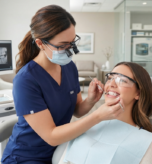
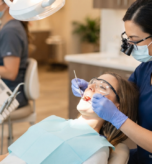
At Agave Dental, candidacy for a dental bridge begins with a comprehensive dental examination. This includes assessing your teeth, gums, bite, and overall oral health. Digital imaging may be used to determine bone and tooth stability.
Based on this evaluation, we create a personalized treatment plan designed for long-term success.
How to Improve Your Eligibility
If you’re not immediately eligible for a dental bridge, treatments such as gum therapy, fillings, or crowns may help prepare your mouth. Improving oral hygiene and addressing existing issues can make a significant difference.
Dental bridges are a reliable and effective way to restore missing teeth, but eligibility depends on several important factors. A thorough dental evaluation is the best way to determine if this solution is right for you.
At Agave Dental, we are committed to helping you restore your smile with solutions tailored to your needs. If you’re considering a dental bridge, our team is here to guide you every step of the way.